Revealing the PHOTARCH web archive at Nordic TAG in Kalmar
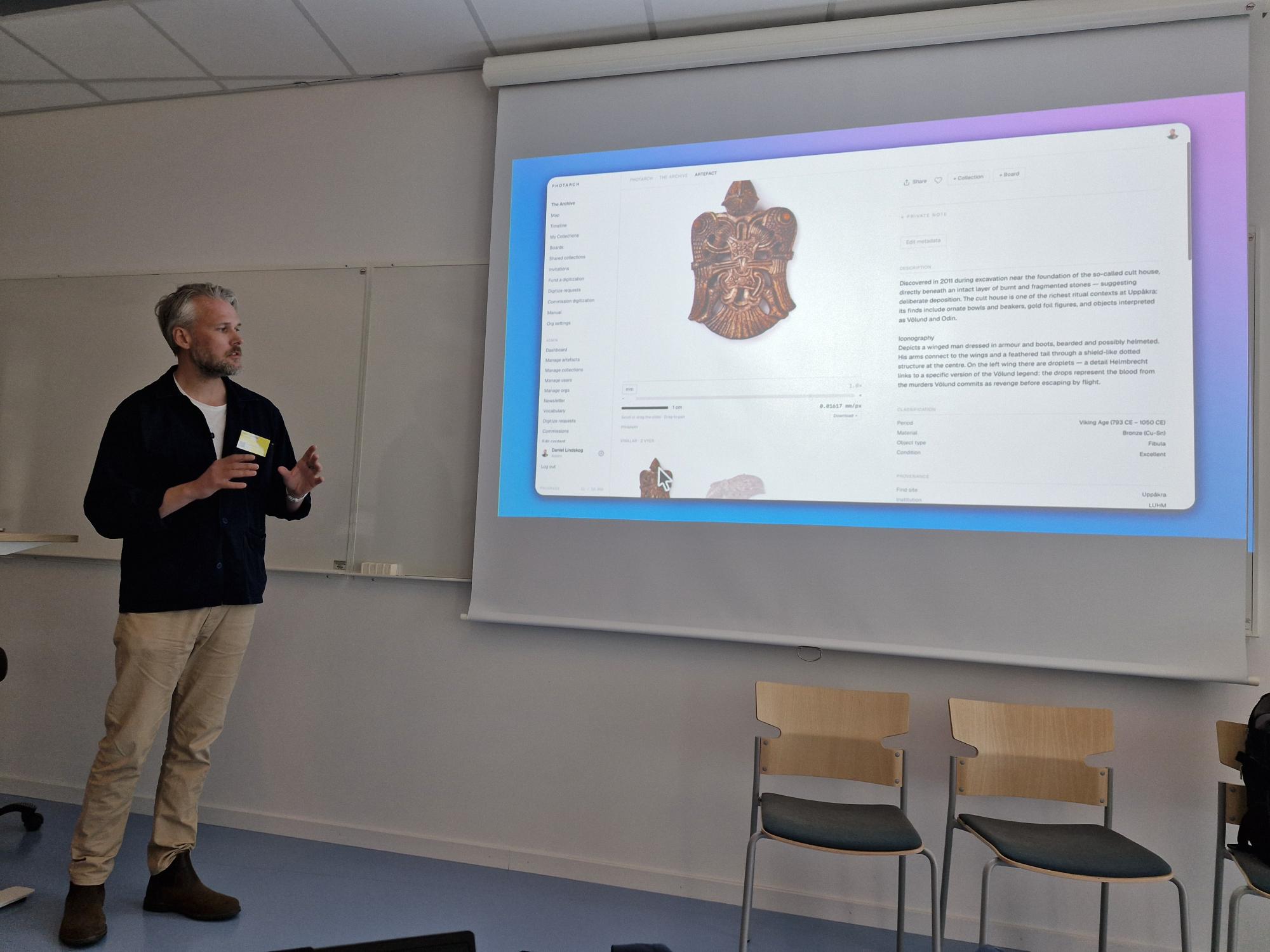
In May I presented PHOTARCH at Nordic TAG in Kalmar.
Nordic TAG — the Nordic Theoretical Archaeology Group — is a meeting place for archaeological theory, where the discipline steps back from the trench to examine how it produces knowledge. The 2026 conference was held at Linnaeus University in Kalmar, 6–9 May, under the theme Activate Archaeology for just futures: a programme concerned with knowledge production, access, and who archaeological work is ultimately for. It was the right room in which to show a tool whose whole argument is about how we present what we know.
What I revealed was the web version of PHOTARCH, with the dataset. Until now the method and the archive had mostly been shown as images and principles. In Kalmar I showed the working thing — the public web archive, populated with real, standardized records, searchable and readable in the browser.
The part I spent most time on was scale. It is easy to make an archive that looks good with fifty objects. The harder question, and the one that decides whether a standard is worth adopting, is what happens at fifty thousand. So I showed how PHOTARCH is built to hold: how a standardized capture and a structured, machine-readable record let the archive stay fast and legible as it grows — searching, filtering, and browsing that do not degrade when the dataset does not. Scalability here is not a technical boast. It is the difference between a demonstration and an infrastructure institutions can actually commit to.
That is the through-line I wanted the room to take away. Standardization is what makes scale possible, and scale is what makes an archive useful to more than its author. A record captured to a known standard and described in a structured way is not tied to one screen or one moment — it can be searched, compared, and re-presented as the collection grows and as new needs appear. The method is the precondition; the archive is what the method makes possible.
My thanks to Linnaeus University and the Nordic TAG organisers, and to everyone who came to talk afterwards. Showing the working archive in front of the people who would use it — and be sceptical of it — is worth more than any amount of describing it.